
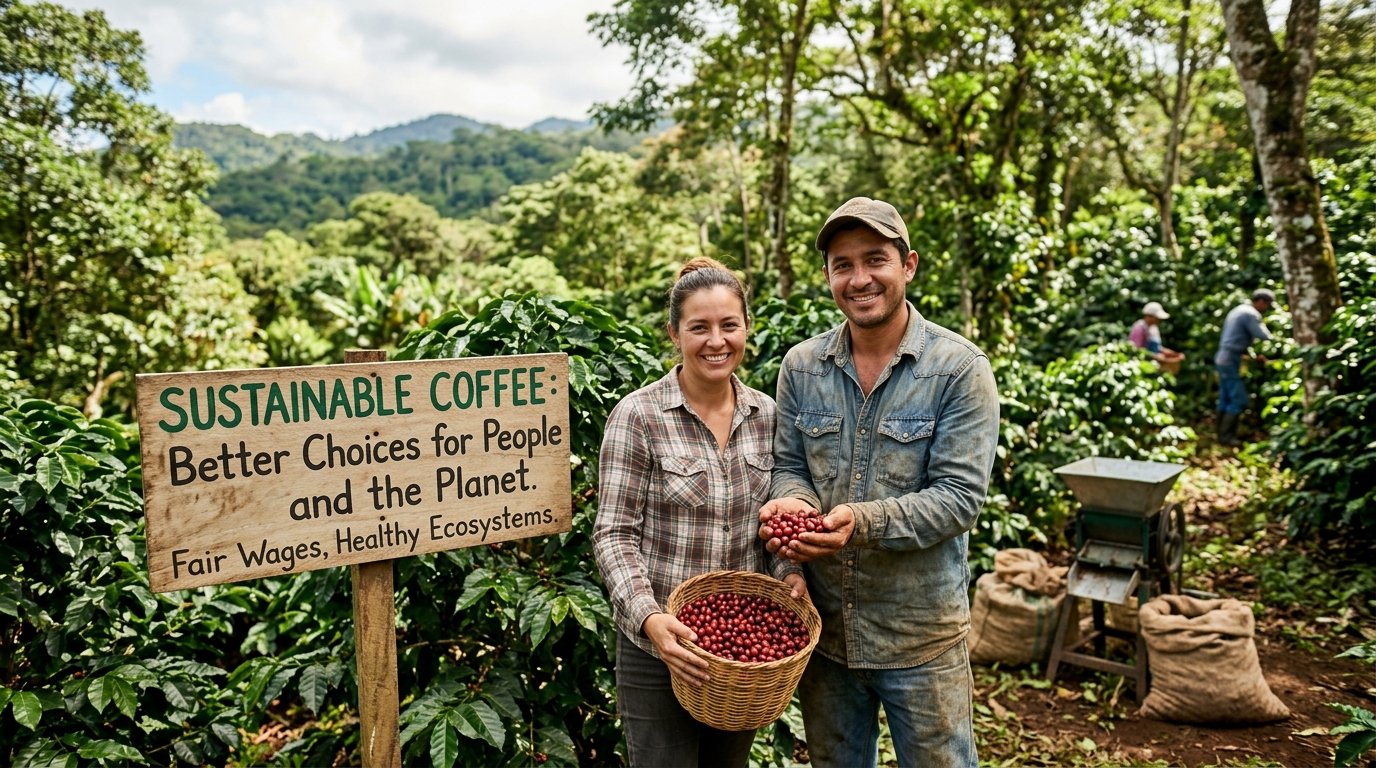
Why Sustainability Matters
Coffee connects agriculture, trade, energy, packaging, transport, and consumption. Sustainable coffee considers the long-term health of growing regions, the people who produce coffee, and the environment that supports the crop.
Farming Practices
Shade trees can provide habitat and help protect soil, while careful water management reduces waste. Farmers may use composting, erosion control, selective harvesting, and integrated pest management to strengthen their farms.
Buying Responsibly
Look for roasters that explain where their coffee comes from and how they work with producers. Certifications can offer useful information, but transparency about sourcing and pricing is also important.
Reduce Waste at Home
Use a durable brewer and reusable filter when practical. Coffee grounds can often be composted, and buying an amount you can finish helps prevent stale coffee from being discarded. Reusable cups may also reduce single-use waste.
Energy and Water
Heating water uses energy, so brew only what you need. Keep equipment efficient and clean. Avoid wasting water while rinsing or preparing coffee, but always prioritize food safety and proper cleaning.
Conclusion
No single action solves every sustainability challenge. Small, consistent choices combined with informed purchasing can help create a more responsible coffee routine.





Leave a Reply