
What Roasting Does
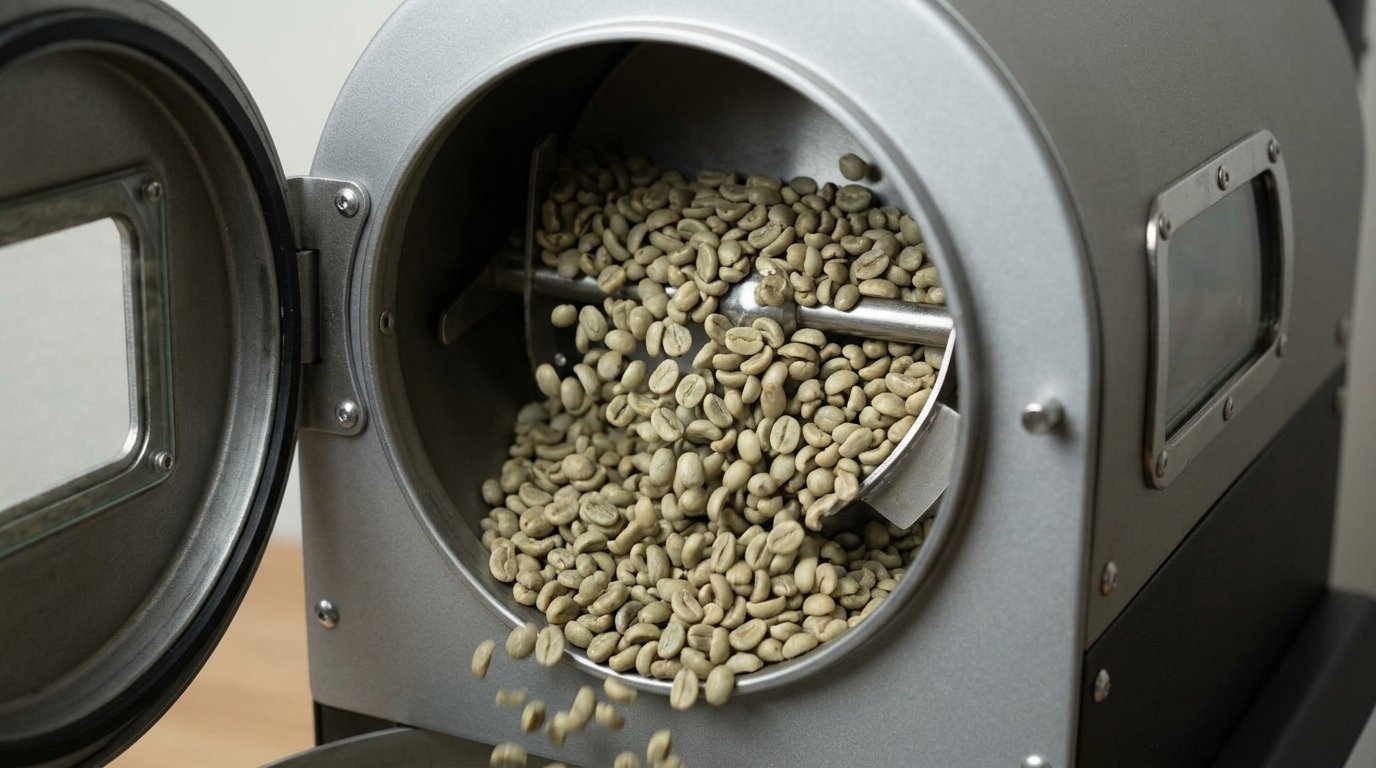
Green coffee beans are dense and grassy before roasting. Heat transforms them through a series of chemical reactions that create the aromas and flavors associated with coffee. Roasting also changes color, density, solubility, and the way beans behave during brewing.
Light Roasts
Lightly roasted coffee often preserves more of the bean’s origin character. You may notice floral aromas, fruit-like acidity, citrus, berries, or tea-like qualities. These coffees are frequently brewed with pour-over methods that reveal detail.
Medium Roasts
Medium roasts balance origin character with caramelized sweetness. Notes of nuts, chocolate, stone fruit, and brown sugar are common. This style works well across drip, pour-over, and immersion brewing.
Dark Roasts
Dark roasting emphasizes roast flavors such as bittersweet chocolate, smoke, spice, and toasted nuts. The original origin character may be less prominent. Dark beans can work well in milk drinks because their flavor remains noticeable through dairy.
Choosing a Roast
Roast level is not a quality ranking. A light roast is not automatically superior, and a dark roast is not automatically inferior. Choose based on the flavors you enjoy and the brewing method you use. Freshness matters for every roast.
Conclusion
Understanding roast levels helps you shop with confidence. Taste the same coffee at different roast profiles when possible, and pay attention to sweetness, acidity, body, and finish rather than relying only on the label.





Leave a Reply